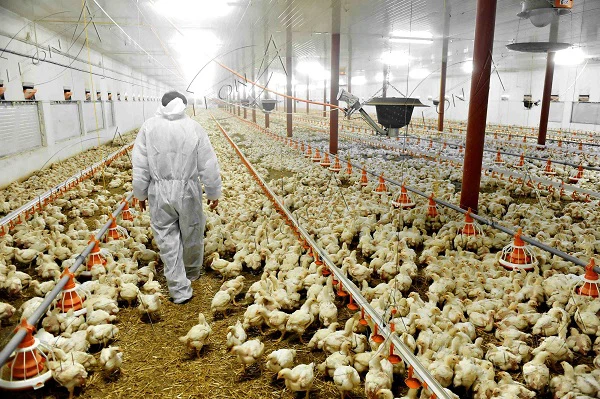
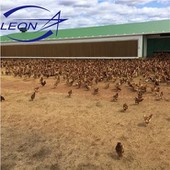
As happens in many livestock raising industries, there is also the proverbial “grass versus commercial feed” debate in chicken raising. Proponents of the "grazing" school claim that pastures provide chickens with a natural food, combined with insects, bugs, sand and small stones. All of these preferences are explored by the chickens themselves, not placed directly in the feeding tray by human decisions. The process of itinerant exploration of food is essential and closely related to the well-being of the chicken. Through the word pasture, we define a wide range of plant species: grasses, clover, alfalfa (twill), chicory, legumes, canola, etc. The biodiversity of pastures is directly related to the quality of the food (ie, the more diverse the food, the better the quality). Many chicken farmers support that if a field can supply enough pasture for the chickens year-round, there is no need to provide additional food sources other than pasture, hay and crushed corn in the feed. Many farmers also use chicken frames (or boxes) as an easy and convenient way to provide chickens with fresh pasture in a small space. The chicken coop is actually a raised bed protected by a wire cloth. Chickens can only eat the top half of the stem of the plant, while the roots of the plant are protected and the plant can regrow after a few days.
However, it is not safe for chickens to eat any unknown plant. When raising chickens on pastures, it is highly recommended to remove any nocturnal plants (tomatoes, potatoes, eggplants, etc.) from the field as the leaves and other parts of these plants are toxic to chickens. Other ornamental plants (rhododendrons) and shrubs are also poisonous to chickens, and eating even a small leaf can be life-threatening.
Note that although fields with a rich variety of flora are a good source of food during the cold winter months when frost occurs, even if we leave the coop doors open and the fields provide enough plants, based on the weather, the chickens will not Will leave the coop most of the day. Therefore, in most cases, we must ensure sufficient stock of commercial chicken feed to provide chickens with balanced and nutritious foods rich in protein and fiber.
The most standard commercial chicken feed is a mixture of soybean, corn, and cotton seeds, usually mixed with alfalfa. Newborn chicks require a nascent feed, usually 20% protein, often combined with drugs to prevent coccidiosis. Scratch scraps are used to increase energy for laying hens that eat primarily grass. Made from crushed corn and whole wheat, Scratch crumbles are great for keeping chickens warm during the cold winter months. When we raise chickens for eggs, it is common practice to provide (among other feeds) pellets high in calcium (3%) to promote egg production. When we raise broilers, we generally add more grains (wheat, barley, and sorghum) (up to 20% protein) to the chicken's diet to promote growth.
Pellets are now a very popular option for chicken farmers. The reason is that pellet feed ensures that the flock gets the best combination of nutrients according to its use, growth stage and needs. As a result, the flocks no longer have the opportunity to eat according to their food preferences, leaving the ones they don't like. However, even farmers who provide their chickens with pelleted feed often add small percentages of whole grains to their chickens' diets. The reason is that eating whole grains can irritate the sensitive parts of the chicken's stomach, which is closely related to the health and well-being of the chicken. Note that grit is also important when chickens are not eating grass at all. Since chickens have no teeth, grit (dirt, sand, and small stones) is very helpful for digestion. If your chickens are outside on pasture and choose their own food, they will naturally choose the grit they need from the field, so there is no need to add extra grit to the diet.
Finally, chickens need to have access to water 24 hours a day. We can place 2-3 (automatic or non-automatic) drinkers in the chicken house and in the field.